



South Africa's air pollution crisis which is driven by industrial activity and worsened by climate change demanded a monitoring solution that was intelligent, affordable, and deployable at scale. Our team responded by developing the AI_r System: a network of IoT-enabled, AI-powered air quality sensors capable of providing real-time environmental health intelligence across the country.
More than 500 cost-effective AI_r sensors were deployed across Johannesburg from 2023, with rollout expanding to strategic locations across Gauteng province in 2025. Each device combines IoT sensing technology with AI-powered analysis, monitoring pollutant concentrations, including harmful PM2.5 particles and feeding data continuously into a centralised cloud platform.
The team extended the system’s reach indoors through a dedicated pilot programme developed in partnership with Africa Weather, installing AI_r sensors in workplaces and institutions to monitor indoor air quality and produce automated reports identifying pollution sources and trends.
The system continuously records and delivers:
- Real-time outdoor and indoor air quality readings across Gauteng
- Automated reporting for businesses and institutions through a centralised dashboard
- Localised health risk alerts via a mobile application that integrates IoT sensor data, satellite imagery, and epidemiological sources

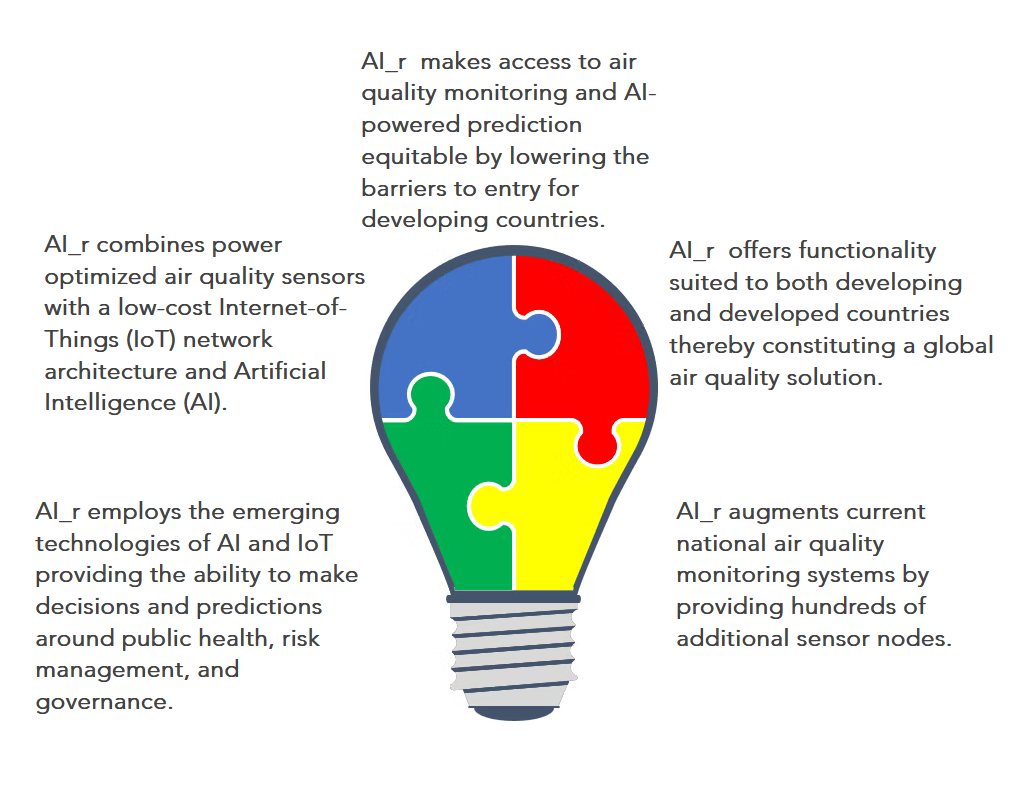
The data obtained is made publicly available to communities, researchers, and policymakers through the dashboard. Local authorities in Johannesburg and Kya Sands have used real-time sensor data to identify and act on illegal burning activity resulting in direct improvements in air quality and public health enforcement. The national authority responsible for air quality monitoring in South Africa, the Department of Forestry, Fisheries and the Environment, has officially endorsed the rollout of the designed sensors hence reducing dependency on expensive imported technology and strengthening South Africa's domestic environmental monitoring ecosystem. The solution received the ODESS 2025 Prize from the Pierre Fabre Foundation in recognition of its global relevance and impact.